When One Person Handles Everything in a Utility System
In many small water and wastewater systems, one employee may handle field work, records, reporting, customer questions, contractor coordination, maintenance, and day-to-day problem solving. When so much responsibility depends on one person, keeping information organized becomes part of keeping the system running.
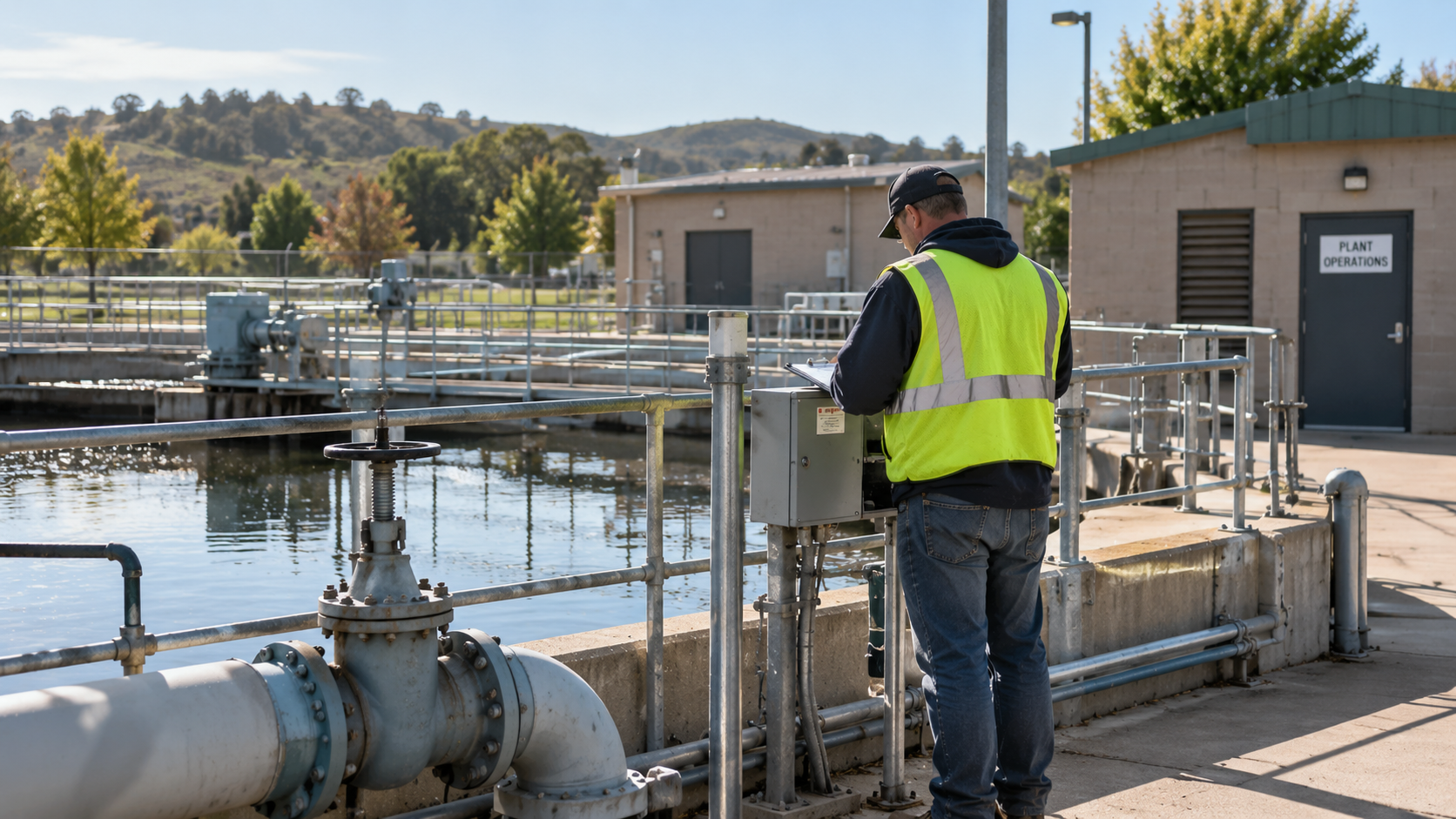
Small utility systems do not always have separate people for operations, maintenance, administration, customer service, reporting, and recordkeeping. Sometimes the person inspecting equipment in the morning is the same person answering a customer question, coordinating a contractor, updating a spreadsheet, and preparing a report later that afternoon.
That reality is common across small and rural water and wastewater operations. The challenge is not simply that one person has a lot to do. It is that every responsibility creates information, follow-up, and decisions that also need to be tracked.
When the structure behind that work is clear, one person can move between responsibilities without having to rebuild the context every time. When information is scattered, the same employee may spend valuable time searching for records, remembering what happened, or recreating information that already exists somewhere else.
One Job Title Can Represent Many Different Responsibilities
In a larger organization, different departments or employees may handle field operations, maintenance, administration, customer communication, reporting, and contractor management. A small utility may not have that separation.
One employee may move between several of those responsibilities throughout the same day.
Each responsibility may be manageable on its own. The difficulty comes from having to move between all of them while still remembering what has happened, what needs attention, and where the supporting information is located.
Utility Work Rarely Happens One Task at a Time
A small-system operator may begin the day with a clear list of work, but utility operations can change quickly. A routine inspection may uncover a problem. A resident may call. A contractor may need access to a site. An alarm may require attention. A report may still be due before the end of the day.
The challenge becomes context switching: stopping one responsibility, moving to another, and later returning to the original work without losing track of what still needs to happen.
Every interruption creates another point where notes, follow-up, or important details can be lost if the information does not have a clear place to go.
Small Systems Often Build Recordkeeping Around Whatever Has Worked
Many small utilities use practical tools that developed naturally over time. A notebook stays in the truck because it is easy to reach. A binder holds inspection forms. A spreadsheet tracks equipment. Emails preserve conversations with contractors. Printed reports are filed in the office.
None of these tools is automatically a problem. In fact, they may have worked well for years. The difficulty appears when one person has to remember which tool contains which piece of information.
As responsibilities grow, the mental effort required to remember where everything is stored grows with them.
Small Searches Can Add Up Across a Busy Week
A board member asks when a piece of equipment was last repaired. A customer asks about previous work at a property. A contractor needs information about an asset. An inspection record from last year needs to be reviewed.
When the information is scattered, answering a basic question can require several separate searches.
The issue is not that the answer does not exist. It is that finding it can take more effort than it should. For a small team, those extra minutes matter because they take time away from other work that also needs attention.
Information Becomes Easier to Use When It Has a Clear Place to Belong
Good organization does not require documenting every possible detail. It means giving important information a predictable structure.
A location can provide context for the infrastructure there. An asset can carry its own service history. A task can document the work that needs to happen. A completed report can remain connected to the activity that created it.
That structure reduces the number of places a person has to search and makes it easier to update information while the work is still fresh.
Experienced Employees Carry an Enormous Amount of System Knowledge
In many small utilities, the most experienced employee knows details that may never have been formally documented. They know which valve is difficult to operate, which pump has caused trouble before, where a line runs, which contractor completed a repair, and why a certain decision was made years ago.
That experience is valuable. Organized records are not meant to replace it. They help preserve the useful information that experience creates.
The goal is not to replace what an experienced operator knows. It is to make sure important system knowledge does not exist only in one person’s memory.
The System Still Has to Function When That Person Is Not There
Even the most dependable employee cannot be available every day forever. People take vacations, get sick, change positions, retire, or eventually leave the organization.
A utility should not have to reconstruct its operational history every time someone else needs to step in.
Better continuity does not mean a new employee immediately knows everything the previous employee knew. It means they have a clearer starting point and do not have to begin with empty folders, scattered notes, or unexplained records.
Small Teams Do Not Need More Administrative Work
A recordkeeping process can be organized and still fail if it takes too much time to maintain. For a small utility, simplicity matters because the person updating the records may also be the person performing the work.
Documentation should fit into the operational process rather than becoming a separate project at the end of every day.
The simpler it is to document activity in the right place, the more likely the record will remain useful and current.
Not Every Detail Should Have to Stay in Someone’s Head
Managing a small utility involves constant reminders. A contractor needs a call back. An inspection is coming due. A repair needs follow-up. A report still needs to be completed. Someone asked for information that has to be found later.
When those responsibilities are tracked primarily through memory, handwritten reminders, or disconnected lists, the person managing the system also has to carry the burden of remembering what cannot be forgotten.
Organized records cannot remove the responsibility of running the system, but they can reduce the amount of information that has to be carried mentally from one task to the next.
Small Utility Employees Often Move Between the Field and the Office
The distinction between “field employee” and “office employee” can be much less clear in a small system. The same person may inspect infrastructure outside and then return to a computer to enter notes, prepare documents, answer email, or update records.
Information needs to survive that movement.
- Inspect equipment
- Complete maintenance
- Identify issues
- Take notes
- Update records
- Prepare reports
- Review history
- Plan follow-up
When field activity and office records remain connected, the employee does not have to recreate the story of the work later.
Organized Records Support the People Who Already Know the System Best
Small utility systems are often kept running by people with deep practical knowledge of their infrastructure and communities. They know what normal operation looks like. They recognize when something feels different. They understand local conditions and remember years of previous work.
That experience cannot be replaced by a database, spreadsheet, work order, or report.
The purpose of better recordkeeping is to support that experience. When records are organized, the employee has a clearer way to preserve what has happened, retrieve what they need, and share useful information with someone else when necessary.
The Organization Should Own the History, Not Just the Person Who Remembers It
A utility system will usually outlast the people currently operating it. Pumps will be replaced. infrastructure will be repaired. New employees will arrive. Responsibilities will shift. Procedures may change.
The history created during those years should remain useful through those transitions.
When One Person Handles Everything, the Structure Behind the Work Matters
Small water and wastewater systems often depend on employees who move between many responsibilities throughout the day. They may be operators, maintenance workers, administrators, customer contacts, recordkeepers, and problem solvers at different moments.
The goal should not be to turn that person into a full-time recordkeeper. It should be to make the information created through their work easier to capture, find, and use.
Clear connections between locations, assets, tasks, reports, files, and previous activity can reduce the amount of searching and repeated work required to answer everyday questions.
Organized records also give the utility something larger than convenience. They preserve institutional knowledge. If another employee needs to step in, the history of the system does not have to depend entirely on what one person remembers.
Small utility teams already do a great deal with limited time and resources. Recordkeeping should support that work rather than compete with it.
When one person handles nearly everything, a practical and connected record structure can help keep the work organized today while preserving the knowledge the organization will need tomorrow.
When one person handles many parts of a utility system, good records become part of the support structure.
Clear connections between locations, assets, tasks, reports, and operational history reduce the amount of information one person has to carry from memory and help preserve that knowledge for the rest of the organization.
Keep Exploring
Explore tools and resources designed to help small utility teams organize records, field activity, infrastructure, and daily operations.
Explore the R2 Platform
See how locations, assets, tasks, contacts, files, reports, and operational history can stay connected.
Explore Platform Learning CenterFind Guides and Resources
Browse practical resources for records, workflows, infrastructure, field operations, and utility programs.
Visit Learning Center Utility SystemsExplore System Plans
Review R2 options for utility systems managing infrastructure, records, tasks, reporting, and connected operations.
Explore System PlansGive Your Team a Clearer Way to Keep Utility Information Organized.
R2 helps water and wastewater systems connect locations, assets, tasks, contacts, files, reports, and operational history in one platform built around the work they manage every day.