
Why Municipalities Need Organized Utility System Records
Municipalities depend on reliable information to manage the water and wastewater infrastructure serving their communities. Organized records help preserve system knowledge, support daily operations, improve communication, and provide a stronger foundation for long-term planning.
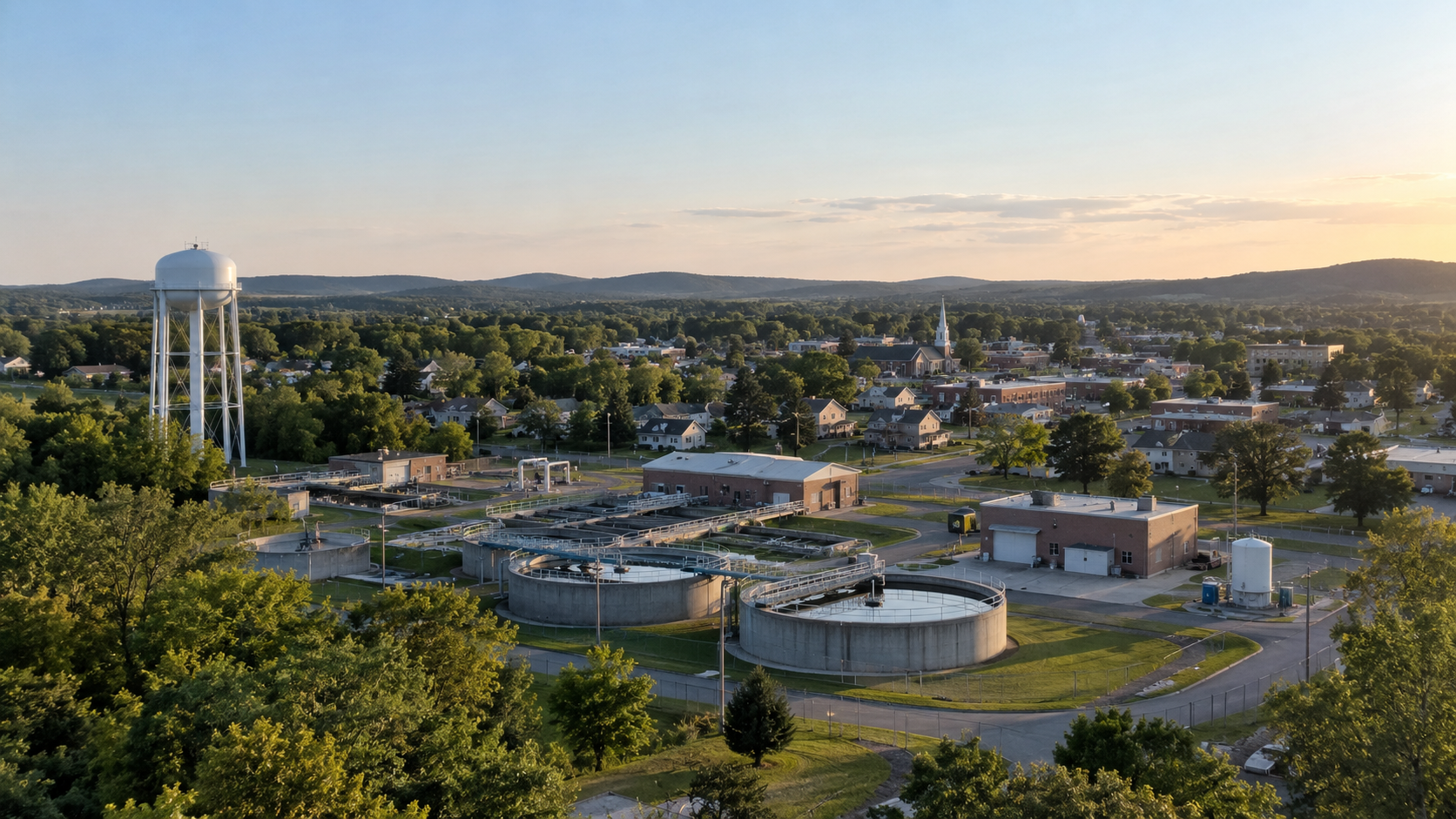
Municipalities are responsible for services that residents and businesses depend on every day. Water and wastewater systems are among the most important, supporting public health, homes, businesses, fire protection, development, and the long-term growth of the community.
Behind that infrastructure is an equally important collection of information. Locations, assets, inspections, repairs, maintenance, contacts, reports, files, and completed work all contribute to the municipality’s understanding of the systems it is responsible for managing.
When those records are organized, staff can more easily understand what exists, what has happened, what needs attention, and how the system has changed over time. When they are scattered, even routine questions can require significant time and institutional knowledge to answer.
Utility Records Represent Infrastructure an Entire Community Depends On
A municipality’s water and wastewater records are connected to physical infrastructure spread throughout the community. That can include treatment facilities, pumps, valves, meters, backflow assemblies, service locations, collection infrastructure, equipment, and other assets that support daily operations.
Each of those assets can generate its own history. It may be inspected, maintained, repaired, replaced, tested, photographed, or included in a report. Over time, individual pieces of information become part of a much larger municipal record.
Good Records Help Answer Basic Questions About the System
One of the most useful functions of municipal records is providing context. Staff should be able to begin with a location, asset, or operational issue and understand the information connected to it.
The questions themselves are often straightforward. The challenge is whether the information needed to answer them can be found quickly and confidently.
Municipal Records Often Build Up Across Different Systems Over Time
Municipal utility records rarely begin with one clean information system. They develop gradually as employees, departments, technology, and operational requirements change.
A paper filing system may have worked for years before spreadsheets were introduced. Shared drives may have been added later. Employees may maintain their own documents, email threads, photographs, or notes. Some of the most useful information may never have been formally documented because experienced staff simply knew the system.
None of these methods necessarily means the information is inaccurate. The larger problem is fragmentation. As the number of places containing useful information grows, so does the effort required to understand the complete history behind a location, asset, or issue.
Important System Knowledge Should Not Depend on One Employee’s Memory
Long-term employees are often an invaluable source of knowledge. Someone who has worked with a municipal system for ten, twenty, or thirty years may remember previous repairs, unusual infrastructure, recurring problems, property history, and decisions that are difficult to find anywhere else.
That experience is valuable, but it also creates a risk when important information exists primarily in someone’s memory. Employees eventually retire, change departments, take other jobs, or simply may not be available when a question needs to be answered.
Years of experience can become difficult to transfer when information is not consistently documented.
Organized documentation allows future employees to understand previous activity without starting from scratch.
Institutional knowledge becomes more valuable when it is preserved in records the next employee can actually use.
One Municipal System May Need to Support Many Different People
Municipal utility operations often involve more people than the field crew maintaining the infrastructure. Office staff, supervisors, public works leadership, billing departments, contractors, management, and outside service providers may all interact with utility information for different reasons.
They do not necessarily need the same information or perform the same work. What they do need is a reliable record structure that allows the appropriate information to remain connected.
Organized Records Help Municipal Staff Respond More Efficiently
A resident may contact the municipality because of a service issue, previous repair, property question, notice, or concern about work happening nearby. To respond, staff may need information that spans several parts of the operation.
When records are organized around locations and related activity, the question can be approached with context rather than beginning with a search through disconnected information.
A service or property question comes in.
Identify the property or area involved.
See related assets, work, notes, and activity.
Provide context or determine the next step.
Better Municipal Records Also Support the People Doing the Work
Organized records are not only useful from an administrative or management perspective. They can also provide field employees with valuable context before and during work.
A crew responding to a repair may benefit from knowing what asset is involved, whether similar work has happened before, what notes were recorded during a previous visit, and whether additional documentation is connected to the location.
Location history, asset information, previous activity, notes, photos, and supporting documents can provide useful context before crews arrive or while they are evaluating an issue.
After the work is completed, the new information can become part of that same history. This creates a cycle where each completed task makes the municipal record more useful for the next person.
Historical Records Can Help Municipalities Understand Future Needs
Municipal infrastructure decisions rarely involve only today’s problem. Public works leaders and municipal staff also need to think about maintenance schedules, replacements, staffing, capital improvements, and future budgets.
Historical records provide useful context for those discussions. Repeated repairs may reveal an asset that deserves closer attention. Inspection history may help identify maintenance needs. Completed work can show where time and resources have been concentrated.
Daily operational history can provide context for longer-term municipal decisions.
Records do not make planning decisions by themselves. They give the people making those decisions a clearer history to consider alongside experience, field conditions, budgets, engineering information, and community priorities.
Organized Records Can Be Especially Valuable for Small and Rural Communities
Smaller municipalities may have fewer employees managing many of the same responsibilities found in larger organizations. A public works employee might handle field activity, customer concerns, reporting, contractor coordination, recordkeeping, and other responsibilities throughout the same week.
In that environment, complicated recordkeeping can create a disproportionate burden. Time spent searching for a document or reconstructing previous work is time that cannot be spent on another operational responsibility.
Information needs to work harder when fewer people are managing the system.
A clear record structure can reduce repeated searching, make handoffs easier, preserve employee knowledge, and give staff a consistent place to begin when questions arise.
Clear Records Support Better Conversations About Municipal Infrastructure
Municipal utility information may eventually need to support conversations beyond the immediate operations team. Department leadership, municipal management, councils, boards, agencies, residents, and other stakeholders may need information about system activity, infrastructure needs, or previous work.
Clear records make those conversations easier because staff have a documented history to reference. Rather than relying only on recollection, the municipality can review the activity connected to the system.
The Records Created Today Should Still Be Useful Years From Now
Municipal infrastructure is built to serve communities for years or decades. The information documenting that infrastructure should have similar continuity.
An inspection completed today may help explain a repair next year. Maintenance notes may eventually provide context for a replacement. A photograph may show how an asset looked before later changes. A completed task may help a future employee understand why work was performed in the first place.
Building that continuity does not require documenting every possible detail. It means keeping important operational information structured enough that someone unfamiliar with the original situation can understand the record later.
Organized Records Help Municipalities Better Understand the Systems They Serve
Municipal utility records are more than paperwork. They represent the history of infrastructure, work, decisions, inspections, maintenance, communication, and daily activity across systems that communities rely on every day.
Organizing that information makes it easier for field crews to understand previous work, office staff to respond to questions, supervisors to review activity, and municipal leaders to consider longer-term infrastructure needs.
It also protects institutional knowledge. As employees and departments change, important information can remain with the municipality rather than disappearing with the person who happened to know it.
For both large and small communities, a clearer record structure helps connect daily operations with long-term public service. The result is not simply better documentation. It is a better understanding of the utility system the municipality is responsible for managing.
Organized utility records help municipalities preserve knowledge about the systems they manage.
Connecting infrastructure, locations, work history, inspections, reports, and operational activity gives municipal staff a clearer foundation for daily work, communication, planning, accountability, and long-term decision-making.
Keep Exploring
Learn more about connected utility operations, organize existing records, or explore tools for managing municipal infrastructure information.
Explore the R2 Platform
See how locations, assets, tasks, contacts, files, notices, and reporting can work together.
Explore Platform Learning CenterFind Guides and Resources
Browse practical resources for managing records, workflows, programs, and daily utility operations.
Visit Learning Center OnboardingBring Existing Records With You
Learn about organizing and importing existing location, assembly, and contact records into R2.
Explore OnboardingBuild a Clearer Record of the Infrastructure Your Community Depends On.
R2 helps municipalities organize locations, assets, tasks, contacts, files, notices, reporting, and operational history in one connected platform.